Monterrico
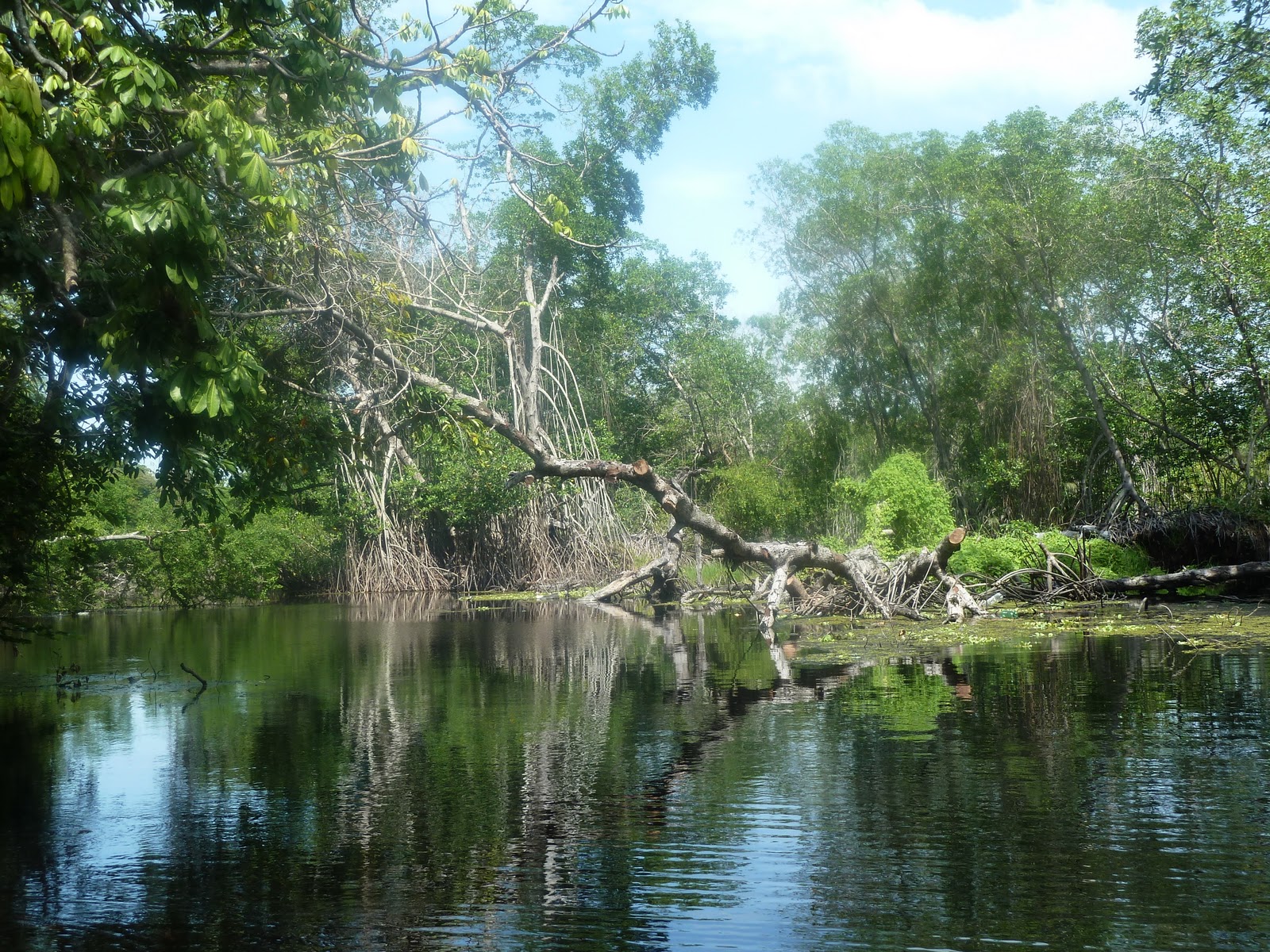 About three hours away from Guatamala City on the Pacific coast, Monterrico (aka Monte Rico) is the largest (and therefore the commercial trading center) of a cluster of villages that also includes Agua Dulce (a system of esturaries—reminding me of Louisianan bayous) in which each family has its own small island, Curvina, and Hawaii. Catchment population about 20,000, I’ve been told, certainly an overestimate. The closest local doctor is about a 90 minute drive away, with no guarantee of being seen on the same day, a real deal-breaker. About three hours away from Guatamala City on the Pacific coast, Monterrico (aka Monte Rico) is the largest (and therefore the commercial trading center) of a cluster of villages that also includes Agua Dulce (a system of esturaries—reminding me of Louisianan bayous) in which each family has its own small island, Curvina, and Hawaii. Catchment population about 20,000, I’ve been told, certainly an overestimate. The closest local doctor is about a 90 minute drive away, with no guarantee of being seen on the same day, a real deal-breaker.
Sharing the black sand beach are weekend homes for the wealthy of Guatamala City, a couple of 2 or 3 star hotels, and the two buildings of the CCCG retreat. One building holds the kitchen and store room; the other has two stories of dormitories, each with 30 or so bunk beds.

The palm-leaf covered but otherwise open-air areas above each building were converted into a clinic for the week, with folding tables for registration, lab, pharmacy, and 3 clinician stations in the larger room. Draped sheets provided some exam room privacy. The smaller room was divided into two areas for me and the midwife. Altogether, 16 volunteers: 3 docs (two family practice and me), one midwife, two nurse practitioners, one NP student, one FP resident, one med student, one lab tech, two nurses, two med admin students, and two non-medical volunteers.
|
Sunday, October 23, 2011
87. OverseasProject #10: Monterrico


Wednesday, October 5, 2011
86: Hurricane Mitch
David, Samuel, and Roberto Alvarez are
evangelists, community activists, and entrepreneurs. In 1982 David started his
ministry (Centro Cristiano Cultural de Guatemala: cccguatemala.com) in his garage as a young man
and hasn’t looked back. He has worked a
number of jobs to support CCCG, most recently an advertising business, but
along the way he worked as a bombadero (firefighter). He built a church in the middle of a
gang-ridden neighborhood and feeds children breakfast if they agree to go to
school that day. He developed an
Oceanside retreat near Monterrico so these same kids could escape the city for
a few weeks every summer. Photo: Roberto (right) working with his David's son Eric inside the clinic.

Enter a Puyallup firefighter who came
to Guatemala to teach bomberos paramedic skills. When his translator didn’t show he asked if
anyone knew English; David raised his
hand and said he spoke a little. They've been friends since. Photo: Front entrance to the clinic. Under construction on right will be open air waiting area.

Enter Donald Van
Nimwegen, a Seattle anesthesiologist who has a long history of
overseas volunteer work that did not end with retirement--many of his days now
spent in a large basement room donated by Group Health where he collects,
sorts, and packs donated medical supplies for various volunteer groups
including Healing The Children and Amigos de Salud. Firefighter introduced Don
to David during a paramedic training mission that turned into a Hurricane Mitch
rescue mission. Don then introduced
David to Jennifer Hooch during an ENT trip.
Jennifer is a family practice doctor with an interest in public health
and lots of energy.
Photo: Work progressing on the clinic's outdoor waiting area. I suspect it will also be a thatched roof.

Add about $40,000 from Rotary groups
in the Puget Sound and the result is a new clinic in Monterrico, the site of my
overseas project #10.
Tuesday, September 20, 2011
85. OP #9: Riobamba II
Summary: Final post for this trip.
10 surgerical cases, short of the 12 from Guayaquil two years ago, but still impressive for 5 days.
82 outpatients, with the primary goal being to screen for surgery, so that means that for about every 8 patients I was able to schedule one surgery. The secondary goal was to provide non-surgical outpatient care. Except for most of the 13 "bladder" patients who expected to have surgery, I think they felt the visits were worthwhile. Anyway, here are the data, with a comparison from 82 random referral patients from my home practice:
category Home Total Home % Riobamba Total Riobamba %
abn bleeding 26 32 4 5
reproductive 14 17 6 7
abnormal Pap 11 14 2 2
abd pain/mass 12 15 31 38
prolapse 6 7 5 5
vag/vulvar 9 11 8 10
breast 2 1 2 2
menopause 1 1 3 4
bladder 1 1 13 16
worried well 0 0 8 10
Comments:
1. Abnormal bleeding: in the U.S., thresholds may be lower; i.e., the level of bleeding that becomes an issue for Americans may be acceptive by Ecuadorans as, "that's life." Or, there may be more pathology among Americans: external hormones, obesity, stress can all contribute to abnormal bleeding.
2. Ecuadorans seemed sophisticated regarding reproductive/contraceptive issues and didn't feel they needed a consult. Also, the average age was higher in Riobamba, so reproductive/contraceptive issues would be less common (maybe if we had advertised on Twitter or Facebooks instead of on the radio....)
3. Finally, the radio announcement apparently mentioned that incontinence surgery would be available, unfortunately, that is not something I do, so I had to turn many away, some having travelled 5 hours to come to Riobamba. Lo siento. Maybe that's a procedure I should adopt, though current methods require expensive supplies.
All told, a good trip, though I may not return, preferring joint local-community projects over the independent, self-contained work accomplished by Amigos de Salud.
10 surgerical cases, short of the 12 from Guayaquil two years ago, but still impressive for 5 days.
82 outpatients, with the primary goal being to screen for surgery, so that means that for about every 8 patients I was able to schedule one surgery. The secondary goal was to provide non-surgical outpatient care. Except for most of the 13 "bladder" patients who expected to have surgery, I think they felt the visits were worthwhile. Anyway, here are the data, with a comparison from 82 random referral patients from my home practice:
category Home Total Home % Riobamba Total Riobamba %
abn bleeding 26 32 4 5
reproductive 14 17 6 7
abnormal Pap 11 14 2 2
abd pain/mass 12 15 31 38
prolapse 6 7 5 5
vag/vulvar 9 11 8 10
breast 2 1 2 2
menopause 1 1 3 4
bladder 1 1 13 16
worried well 0 0 8 10
Comments:
1. Abnormal bleeding: in the U.S., thresholds may be lower; i.e., the level of bleeding that becomes an issue for Americans may be acceptive by Ecuadorans as, "that's life." Or, there may be more pathology among Americans: external hormones, obesity, stress can all contribute to abnormal bleeding.
2. Ecuadorans seemed sophisticated regarding reproductive/contraceptive issues and didn't feel they needed a consult. Also, the average age was higher in Riobamba, so reproductive/contraceptive issues would be less common (maybe if we had advertised on Twitter or Facebooks instead of on the radio....)
3. Finally, the radio announcement apparently mentioned that incontinence surgery would be available, unfortunately, that is not something I do, so I had to turn many away, some having travelled 5 hours to come to Riobamba. Lo siento. Maybe that's a procedure I should adopt, though current methods require expensive supplies.
All told, a good trip, though I may not return, preferring joint local-community projects over the independent, self-contained work accomplished by Amigos de Salud.
Wednesday, August 10, 2011
84. OP #9: Riobamba II
Day 6

The other post-op patients have done well, more pain than expected, partly because it is hard for a surgically naive patient to anticipate the extent of postop pain, and partly because the patients receive significantly less narcotics than they would in the EE.UU.
23 outpatients seen, two surgical candidates, but today was the last day of surgery, so they couldn't be scheduled. The others were mostly a mix of chronic pelvic pain and patients seeking reassurance about treatment programs from local doc's.
At night a closing party; using a non-commissioned officers club with a military band. Too loud and food that looked liked it was catered by Safeway, so I left early, caught a cab home, and packed. My roomate for the week didn't go at all: "I'm 11 years AA and plan to keep it that way."
Wednesday, August 3, 2011
83. OP#9: Riobamba II
Day 5
Peak day: three major cases.
 Two vaginal hysterectomies for complete uterine prolapse (the uterus literally descending beyond the vaginal introitus). Marie, in her 80´s, has high blood pressure (non-compliant with recommeznded meds) but otherwise a good surgical candidate. A combination of age, life-long straining (heavy lifting, multiple and difficult deliveries), malnutrition, and perhaps genetic factors combine to cause the prolapse. Marie Dina (on the left with her husband and my ever faithful translator Sarah) is only 51 but with 8 vaginal deliveries...
 In her early menopause, Judith received "injeciones," presumably estrogen, not uncommon anywhere in the world at that time. She does not remember taking progesterone which protects the uterus from uterine cancer, a standard approach in the past 30+ years. At sixty she experienced an episode of bleeding but was told not to worry about it. Now 62 she presented with persistent bleeding and in our clinic a markedly abnormal ultrasound. Surgical findings showed multiple fibroids (the white mass at top and the egg-shaped mass that was removed early in the case to make it easier o access critical ligaments) and malignant tissue extruding through the uterine wall, making her a candidate for chemotherapy without need for staging. I did not do a omentectomy (removal of a layer of intraabdominal adipose tissue) which is usually performed since the omentum frequently is an early locus of metastasis. But her omentum was normal by palpation and wanting to keep the operation as simple as possible, I left the omentum in place. A difficult decision.
My translator Sarah noted her carrying a set of car keys with an electronic opener, so it is reasonable to assume that she can afford chemotherapy.... (more to follow)
Peak day: three major cases.


My translator Sarah noted her carrying a set of car keys with an electronic opener, so it is reasonable to assume that she can afford chemotherapy.... (more to follow)
Saturday, July 30, 2011
82. OP#9: Riobamba II
Day 4
Two major cases in the OR today:
Both were potential cancer, which raises a critical issue. The intraoperative diagnosis of cancer requires first a preliminary pathology report and then a decision whether to proceed with a "staging" procedure, basically the removal of lymph nodes, where cancer often spreads first. The absence of cancer in any of these analyses may mean no need for chemotheray. If the staging procedure is not done, the patient and her oncologsit is faced with the difficult decision whether to proceed with potentially life-threatening postop treatments.
Since I do not do these staging procedures, shoud I not do overseas surgery with no pathology on surgical oncologist back-up? But if I don´t do the surgery for these patients, they may not have it done until syptoms increase, whicy usually means that the cancer has spread and chemotherapy less likely to be successful.

 Postmenopausal bleeding is often an early sign of uterine cancer. Martha presented with a single episode of such bleeding. Our ultrasound showed a markedly abnormal uterus, increasing the suspicion of cancer. The excised uterus showed a thumb-sized polyp, which is unlikely to be malignant, so she should do okay. I did request that the polyp be sent to a pathologist, but don´t know if that will happen.
 Edelma presented with pain and a right ovarian cyst that had doubled in size over two years. This increase and the nature ("septated") of the cyst again suggested a risk for cancer. But operative findings were unequivocal for a benign growth. At the near-menopause age of 48 we had discussed the removal of the other ovary and she so requested. But it was adherent to the bowel, a consequence of her hysterectomy 15 years previously. Thw risks of injury to the bowel during attepted removal of the ovary was judged more of a risk than future ovarian cancer.
Just ten patients seen in clinic but three scheduled for surgery, an efficiency the reflects the the assistance of a nurse midwife who was part of the team and performed invaluable screening as well as excellent care of non-surgical patients. Nurse midwives are trained manage gynecologic conditions.
Wednesday, July 27, 2011
81: OP#9: Riobamba II
Day 3
Two surgeries, abdominal hystectomy for chronic pelvic pain for 49 year old Mario with chronic pelvic pain since her tubal ligation 20 years before. Hysterectomy for pelvic pain is always an iffy measure. Many women continue to have pain postop, suggesting other sources of pain (gastrointestinal, or muscular for example) or an esceptionally low threshold for pain. But studies have shown that most women who undergo hysterectomy for his reason (assuming that other sources have been investigated and exluded) end up having a better quality of life postop.
Maria's hematocrit (the percentage of blood that is red blood cells) was 51, reflecting her high altitude adaption. Normal range for U.S. is 36-45; for Riobamba 45-55.
The second case was bilateral removal of ovaries for a postmenopausal woman with a “complex” ovarian cyst. Simple cysts are like water balloons—thin walls and clear fluid contents. Complex cysts are everything else—thick walls, solid components. Simple cysts are benign; complex can be malignant. Martha's cyst appeared complex on ultrasound but intraoperatively was clearly benign.
A busy clinic showed just about the same grouping of presenting problems that I might find at home, with one exception: parasites. The other 19 included:
urinary tract problems: 2
reproductive counseling: 2
annual exams: 2
menopausal issues: 3
abnormal bleeding: 2
pelvic mass: 1
chronic pelvic pain: 7
Tuesday, July 26, 2011
80: OP #9/Riobamba II
Day 2:
Clinic: 14 patients
Surgery: With time and the effects of increased abdominal pressure (e.g., heavy lifting or chronic cough), vaginal supporting structures stretch and relax allowing the rectum and/or bladder to bulge into the vagina. Harmful, no; uncomfortable, even painful, yes. Anterior vaginal repairs (anterior colpopexy) begin with an incision in the vaginal roof that runs from the back to within about a half-inch of the urethra, and as it progresses, the underlying connective tissue is dissected away from the vaginal skin, extending one-half to one inch from the center. The freed vaginal skin is excised and the new edges are sewn together, thus eliminating the stretched, redundant vaginal skin that has allowed the bladder to drop. Two anterior repairs went well today, with one predictable complication.
At 46 and in good health Atienia should have recovered easily from this relatively simple procedure. But several hours postop, nurses found her weak, nauseated, syncopal. Her oxygen saturation level measured at 70%. Oxygen saturation is the percentage of hemoglobin binding sites filled with oxygen. Levels below 90% define hypoxia, the point at which organs don't function normally.
At Riobamba's 9035 feet, the atmosphere is still about 20% oxygen, but less gravity at higher altitudes means decreased air pressure, which makes it more difficult for oxygen to enter blood vessels. A number of physiologic changes help Riobambians maintain O2 sats above 95. But Atienia is from Guayaquil, a coastal city and arrived only yesterday to be seen by our team. By giving 100% O2 with a face mask, she did well.
At this level, 4 days is usually cited time required for altitude adjusment. On my first night in Quito (also 9000 feet), I ran 5km in the hotel gym and felt fine (tho at an admittedly wimpy 7km/hr).
Sunday, July 24, 2011
79. Overseas Project 9: Riobamba II
Day 1
Arrived in Riobamba (aka friobamba) around 2pm, after a 5hr bus ride from Quito. Lunch, then to hospital to unpack (most of the 46 participants had two 30-50lb bags of equipment) and to hold clinic. Had time for 8 patients, with a thirty-something American expat translator living in Bogota with no medical background but a Spanish for health providers book, and eyes wide open as we delved into gynecologic issues. Every one presented with incontinence. I haven't done vaginal incontinence surgery in too many years, so turned most away (and felt bad about it since some had travelled from Guayaquil, a 5-6 hr bus ride away. However, two also had symptomatic bladder prolapse and I scheduled them for surgery tomorrow. I'll have to think about resuming incontinence surgery for future overseas projects.
 Chimborazoso from downtown Riobamba. This is earth's tallest mountain as measured from the center of the earth, given the earth's equatorial bulge. In other words, the closest you can get to the sun, while still standing on earth. 20,565 feet above sea level (compare Everest's 29,029 and Mt Rainier's 14,411).
Arrived in Riobamba (aka friobamba) around 2pm, after a 5hr bus ride from Quito. Lunch, then to hospital to unpack (most of the 46 participants had two 30-50lb bags of equipment) and to hold clinic. Had time for 8 patients, with a thirty-something American expat translator living in Bogota with no medical background but a Spanish for health providers book, and eyes wide open as we delved into gynecologic issues. Every one presented with incontinence. I haven't done vaginal incontinence surgery in too many years, so turned most away (and felt bad about it since some had travelled from Guayaquil, a 5-6 hr bus ride away. However, two also had symptomatic bladder prolapse and I scheduled them for surgery tomorrow. I'll have to think about resuming incontinence surgery for future overseas projects.
 Chimborazoso from downtown Riobamba. This is earth's tallest mountain as measured from the center of the earth, given the earth's equatorial bulge. In other words, the closest you can get to the sun, while still standing on earth. 20,565 feet above sea level (compare Everest's 29,029 and Mt Rainier's 14,411).
Sunday, July 3, 2011
78. Hair, part two
Mildred's surgery showed an aggressive form of uterine cancer with biopsies showing the presence of this cancer in the omentum (intra-abdominal fat storage) and the abdominal surface of the diaphragm (the muscle that moves the lungs up and down). In other words, metastatic disease.
She did well postpartum, and consulted with the oncologist who "explained risks and benefits of treatment, what would the advantages of treatment. I also reiterated that treatment will not be curative and that she probably has to go on and off treatment in the years to come"
She did well postpartum, and consulted with the oncologist who "explained risks and benefits of treatment, what would the advantages of treatment. I also reiterated that treatment will not be curative and that she probably has to go on and off treatment in the years to come"
Tuesday, May 31, 2011
77. Lonely
I'm not sure why Beth came in today.
Something about medications and supplements; unwanted facial hair and weight gain. By appearance today she has no excess hair or weight. She takes birth control pills because they suppress testosterone production, testosterone being blamed for the mentioned excesses, and herbal supplements to suppress what used to be called premenstrual syndrome but now goes by the name of premenstrual dysphoric disorder.
I was in the middle of expressing caution about combining multiple prescription and herbal medications when she interrupted me with, "Do you think I can get pregnant?... I'm childless by choice, but all I have is my mother, and I see some of my friends who are unable to get pregnant, and think I could be pregnant for them. That way I would have a family for when I get older, and they would have children..."
I didn't particularly want to play the role of a ballon-breaking realist, but I did point out that at the age of 48, she'd be unlikely to naturally conceive, and would probably not be accepted by any fertility specialist as a surrogate mother or womb.
She seemed to accept my explanation, I'm guessing that she knew the answer but would always regret if she didn't at least ask.
Something about medications and supplements; unwanted facial hair and weight gain. By appearance today she has no excess hair or weight. She takes birth control pills because they suppress testosterone production, testosterone being blamed for the mentioned excesses, and herbal supplements to suppress what used to be called premenstrual syndrome but now goes by the name of premenstrual dysphoric disorder.
I was in the middle of expressing caution about combining multiple prescription and herbal medications when she interrupted me with, "Do you think I can get pregnant?... I'm childless by choice, but all I have is my mother, and I see some of my friends who are unable to get pregnant, and think I could be pregnant for them. That way I would have a family for when I get older, and they would have children..."
I didn't particularly want to play the role of a ballon-breaking realist, but I did point out that at the age of 48, she'd be unlikely to naturally conceive, and would probably not be accepted by any fertility specialist as a surrogate mother or womb.
She seemed to accept my explanation, I'm guessing that she knew the answer but would always regret if she didn't at least ask.
Monday, May 30, 2011
76. Boy's Day
Just off a 24-hr shift with four baby boys:
1:14pm, Aiden Quinn, 9lb 7oz, vaginal birth
2:11pm, Leolani David, 8lb 4oz, vaginal birth
10:09pm, Cooper Davies, 7lb 12oz, cesarean, and
4:17am, Bennett Rosario, 9lb 12oz, vaginal
Moms and babies all doing well.
1:14pm, Aiden Quinn, 9lb 7oz, vaginal birth
2:11pm, Leolani David, 8lb 4oz, vaginal birth
10:09pm, Cooper Davies, 7lb 12oz, cesarean, and
4:17am, Bennett Rosario, 9lb 12oz, vaginal
Moms and babies all doing well.
Friday, May 27, 2011
75. Paper or plastic; Percocet or Dilaudid
In Her wisdom, Mother Nature boosts a pregnant woman's self-clotting mechanisms. After all, when the placenta separates (or perhaps better said, tears off) from the uterine lining, a lot of big blood vessels suddenly open up and bleed. So stronger clotting means less risk of postpartum hemorrhage (in the developing world the most common cause of maternal mortality).
But the clotting mechanism is a delicate balance. Too much causes larger clots to form in veins, some breaking off and traveling to the heart, lungs and/or brain, where they can wreck havoc. Beth is about 10 days postpartum (a cesarean--surgery and anesthetic agents also increase clotting) with a pulmonary embolus (PE)--several of those clots are plugging parts of both lungs. So she gets heparin and other blood thinners to dissolve those clots, or at least keep new ones from forming.
PE hurts, but Beth tells us that Percocet helps that pain, though does not help the pain associated with her abdominal pain, unlike Dilaudid, which helps the incisional pain but not the chest pain. Both are equally strong narcotics. Go figure.
But the clotting mechanism is a delicate balance. Too much causes larger clots to form in veins, some breaking off and traveling to the heart, lungs and/or brain, where they can wreck havoc. Beth is about 10 days postpartum (a cesarean--surgery and anesthetic agents also increase clotting) with a pulmonary embolus (PE)--several of those clots are plugging parts of both lungs. So she gets heparin and other blood thinners to dissolve those clots, or at least keep new ones from forming.
PE hurts, but Beth tells us that Percocet helps that pain, though does not help the pain associated with her abdominal pain, unlike Dilaudid, which helps the incisional pain but not the chest pain. Both are equally strong narcotics. Go figure.
Sunday, May 15, 2011
74: Hair
Mildred is 63 with a new diagnosis of uterine cancer. Uterine cancer shows early and more often than not surgical removal of the uterus is a total cure. Based on early evaluation her appears that it may be more advanced, requiring postoperative treatment, chemotherapy and/or radiation therapy.
She immediately expressed concerned about her hair: "I don't want to lose my hair. My husband's taking blood pressure medicine so we don't do it anymore, but I still like to be his girl. I can't lose my hair."
She immediately expressed concerned about her hair: "I don't want to lose my hair. My husband's taking blood pressure medicine so we don't do it anymore, but I still like to be his girl. I can't lose my hair."
Saturday, March 26, 2011
73. Follow-Up
At 26 Gwen's Pap smear shows “severe dysplasia” (which means the presence of cellular changes that carry a 10-15% risk of progressing to cancer). She was referred for a gynecologic consult to confirm the diagnosis and to make recommendations for management (usually a simple office procedure that removes a button-size segment from the tip of the cervix). She did not make an appointment.
3 months later: patient encouraged by phone to make gyn appointment. She replied that she was waiting for the new year because she had used up her deductable for the current year.
Over the course of the next 3 years, 8 more telephone calls were made from the family practice office, and three letters sent, all reminders of the importance of follow-up.
She finally comes in for STD screening because of an abnormal discharge. These screening tests were negative, but a Pap smear obtained at the same time diagnoses cervical cancer
Next week she will start radiation therapy, then a radical (i.e. extensive) hysterectomy. She may survive the cancer, but the effects of radiation and surgery will be permanent and potentially disabling
Friday, March 18, 2011
72. IUFD
Around 30 weeks, Tess hadn't felt much movement for a few days, so she came in. No heart tones with the doppler; ultrasound confirmed IntraUterine Fetal Demise. Labor was induced and in just a few hours she delivered a lifeless but otherwise normal appearing baby.
Now two weeks later she comes in as recommended, though "I really didn't want to come in." I shared with her test results: no evidence of infection, a "less than 10% placental infarct," and a "true knot" in the cord but without sign of ischemia--lack of blood flow--on either side of the knot. So we really don't know; we rarely do in this setting.
I asked her if she though she was coping okay (she shrugs), if she had people she could talk with (yes), if she wanted to talk with a counselor (no), if she was sleeping (not at all, "I keep seeing tiny coffins.")
I gave her some ambien and contraception.
Now two weeks later she comes in as recommended, though "I really didn't want to come in." I shared with her test results: no evidence of infection, a "less than 10% placental infarct," and a "true knot" in the cord but without sign of ischemia--lack of blood flow--on either side of the knot. So we really don't know; we rarely do in this setting.
I asked her if she though she was coping okay (she shrugs), if she had people she could talk with (yes), if she wanted to talk with a counselor (no), if she was sleeping (not at all, "I keep seeing tiny coffins.")
I gave her some ambien and contraception.
Monday, March 14, 2011
71. SSKI
As an essential component of the thyroid hormone, most ingested iodide concentrates in the thyroid gland. The same happens with inhaled iodide, as in radioactive iodide, a common by-product of nuclear fission (see nuclear bombs and nuclear plant accidents). Anyone downwind from Japan should think about this.
One of my patients has thought about it and today asked whether she should start taking SSKI, a potassium iodide supplement. It turns out that saturating (more or less) our bodies with SSKI makes it likely that any inhaled radioactive iodide will be excreted rather than concentrated in the thyroid gland where it can cause cancer.
 I politely reassured the patient: any radiation released from the earthquake-damaged reactors in Japan would be at very low levels by the time they reached the American west coast, so no need for preventative measures such as SSKI.
That was this morning. Tonight, I'm reconsidering my advice.
p.s. SSKI does not protect against any other radioactive danger but can mess up the body's endocrine system.
One of my patients has thought about it and today asked whether she should start taking SSKI, a potassium iodide supplement. It turns out that saturating (more or less) our bodies with SSKI makes it likely that any inhaled radioactive iodide will be excreted rather than concentrated in the thyroid gland where it can cause cancer.
I politely reassured the patient: any radiation released from the earthquake-damaged reactors in Japan would be at very low levels by the time they reached the American west coast, so no need for preventative measures such as SSKI.That was this morning. Tonight, I'm reconsidering my advice.
p.s. SSKI does not protect against any other radioactive danger but can mess up the body's endocrine system.
Saturday, March 12, 2011
70: It's In the Air
In post 34 I described the resumption of menses 2-3 years after a natural menopause, associated with the extended stay of daughter and family. After several months later, the daughter has moved out as planned, but menses continued.
Initially I presented evidence that pheromones (olfactory signals) may influence the timing of menses in young women. I asked, could the same mechanism cause the return of monthly periods after menopause?
But this most unusual event may also have reflected the interplay of reproductive and stress hormones, the latter increased with the stress of a crowded house. Another possible cause of postmenopausal bleeding is cancer. We tested for that: negative.
After the daughter moved out, menses continued, which neither confirms or disproves my speculations.
Initially I presented evidence that pheromones (olfactory signals) may influence the timing of menses in young women. I asked, could the same mechanism cause the return of monthly periods after menopause?
But this most unusual event may also have reflected the interplay of reproductive and stress hormones, the latter increased with the stress of a crowded house. Another possible cause of postmenopausal bleeding is cancer. We tested for that: negative.
After the daughter moved out, menses continued, which neither confirms or disproves my speculations.
Monday, March 7, 2011
69. Everything
Pelvic pain, the nemesis of a gyn clinic.
We all recognize stress as both a cause of and an additive factor to pain, but try to look for "physical" sources first. However, Tammy's words and body language shouted, "stress," so early on I asked, "what is going on around you?"
"Everything," she answered. Daughter leaving home; "had it out with my partner;" no pay when not working (because of the pain), no sleep ("since my daughter was born 18 years ago").
She knows the effect of stress; her assessment is spot-on; she just feels overwhelmed.
The medical profession with its time constraints and the insurance industry's with its limits on mental health coverage have conspired to add to her list: narcotic addiction.
Friday, February 25, 2011
68. Bedside Manner
 Experts tell us that sharing personal experiences improves our "bedside manner." My recent experience with this advice:
Sheila talked about her addiction to peanut butter: "I start out thinking I'll have just a half-sandwhich, then before I realize it, I have finished one and started another." I said the same thing happens to me and then added, "It has be crunchy of course." "Of course." I then said something about how peanut butter has probably been a major factor in her remarkably good health at age 74.

Teresa mentioned how much she likes Dr. Pepper: "When I want a shot of caffeine, I grab a diet Dr. Pepper; that seems to do the trick. "Without doubt," I said, "the best diet soda." Then a description of how she lobbied to have DDP in the office coke machine. One line was allotted, always the first to empty. Later I went down to the clinic's employee lounge. The two rows reserved for DDP were empty. All the other rows in the machine were full.
Is anyone out there paying attention?
Friday, February 4, 2011
67. Drugs, Pain and Death
FDA approval means that a drug has demonstrated safety and efficacy. Recently The FDA pulled Darvon, aka propoxyphene, from the market. Studies 30+ years ago demonstrated that Darvon provided no more pain relief than placebo, but safety issues have been more controversial. Now with 10,000 deaths atributed to its use, the FDA decided to remove it. No tears shed.
 A leading pain expert wants the same judgement on Demerol, aka meperidine: "It's toxic and sedating." Toxic as in seizures, etc.
When I was working at small hospitals without anesthesia support (i.e., no epidurals), we offered Demerol, with many takers. Efficacy is not questioned here as was the case with Darvon, and safety concerns are complicated. Metabolites (compounds produced as the body breaks down Demerol) are long-lasting, something you don't want in a pain killer because of the temptation for both provider and patient to keep increasing the dose for episodes of acute pain, unaware that several hours later the additive effects of Demerol and its metabolites can be life-threatening. My currently hospital/clinic don't allow its use.
Demerol may have been the final (though certainly not the only) cause of Michael Jackson's death.
A leading pain expert wants the same judgement on Demerol, aka meperidine: "It's toxic and sedating." Toxic as in seizures, etc.When I was working at small hospitals without anesthesia support (i.e., no epidurals), we offered Demerol, with many takers. Efficacy is not questioned here as was the case with Darvon, and safety concerns are complicated. Metabolites (compounds produced as the body breaks down Demerol) are long-lasting, something you don't want in a pain killer because of the temptation for both provider and patient to keep increasing the dose for episodes of acute pain, unaware that several hours later the additive effects of Demerol and its metabolites can be life-threatening. My currently hospital/clinic don't allow its use.
Demerol may have been the final (though certainly not the only) cause of Michael Jackson's death.
Wednesday, February 2, 2011
66: Getting Old Is No Fun
Just about as close to verbatim as my memory allows:
"I'm 70 but don't look it, except I use a walker. Now don't get me wrong; I'm not going to go out and kill myself, but I wish the good Lord would take me. I feel and act like a 60 year old... I don't feel old"
Medical problems include seizures, emphysema, incontinence, bipolar disorder, breast cancer.
"I'm 70 but don't look it, except I use a walker. Now don't get me wrong; I'm not going to go out and kill myself, but I wish the good Lord would take me. I feel and act like a 60 year old... I don't feel old"
Medical problems include seizures, emphysema, incontinence, bipolar disorder, breast cancer.
Saturday, January 29, 2011
65: OP#8/Malawi: day 14 continued
My final task was to leave my written recommendations for the molar pregnancy with Dr Te Haal. He was home and accepted them without comment, then asked if I had a few minutes. Rainier explained that Dr. M. who had diagnosed the molar pregnancy probably would not be staying long in Nkhoma because better opportunities existed elsewhere in the country (my impression is that newly graduated physicians were required to spend a few years in rural areas). He further explained that Dr. M. had expressed an interest in Ob-Gyn and might be accepted in a South African residency whose director was a friend of Dr Te Haal. Dr M then might be enticed to return to Nkhoma if there were funds to supplement his government salary of about $700 per month. $700 is fine for food and housing, but for cars, gas, computers, etc., it doesn't go very far.
We all know where Rainier was headed. Could I talk with colleagues who together might collect funds to make all this happen? I appreciate how difficult it is to ask for money. If I hadn't come over with my notes, this conversation wouldn't have happened. It's obviously something he had thought about, but the opportunity just hadn't arisen. It may have been just taking the happenstance of my coming over and the impending departure, or perhaps my interest in follow-up may have suggested that I would be a good candidate for this request. In an event, I said I would think it over. And I have.
To do this right, I would have to link with an existing non-profit (to make sure any donations were tax deductable), or even form my own foundation. A friend of my neighbor was traveling in Vietnam and started a conversation with a cab driver who was an unemployed teacher. One thing led to another, and now this friend returns regularly to VN to drill wells for villages without close and safe water supplies, using the driver as his local connection. He started a non-profit to support this work. Am I up to anything like this?
We all know where Rainier was headed. Could I talk with colleagues who together might collect funds to make all this happen? I appreciate how difficult it is to ask for money. If I hadn't come over with my notes, this conversation wouldn't have happened. It's obviously something he had thought about, but the opportunity just hadn't arisen. It may have been just taking the happenstance of my coming over and the impending departure, or perhaps my interest in follow-up may have suggested that I would be a good candidate for this request. In an event, I said I would think it over. And I have.
To do this right, I would have to link with an existing non-profit (to make sure any donations were tax deductable), or even form my own foundation. A friend of my neighbor was traveling in Vietnam and started a conversation with a cab driver who was an unemployed teacher. One thing led to another, and now this friend returns regularly to VN to drill wells for villages without close and safe water supplies, using the driver as his local connection. He started a non-profit to support this work. Am I up to anything like this?
Wednesday, January 26, 2011
64: OP#8/Malawi: day 14
Part One
 This is the most difficult day to write about. I had a 9:30 deadline for the airport bus, but before that I planned on some rounding and data collection and follow-up notes for the molar pregnancy. I left early and saw a few patients then passed by L&D because I wanted to look at the delivery log. The C.O. on call asked me about a woman in her first labor, pushing for about 30 minutes. He asked about a C/S. My exam showed more descent than one would expect after just 30 minutes--almost crowning (many unmedicated first labors push for 2 hours), so I said I thought she would be okay, but I would finish up some other business and return in half an hour. I asked whether the baby was doing okay and was reassured that there were no problems, though I didn't personally listen to the fetal heart. I finished rounding and returned to find that some progress had been made, but not much. After 15 minutes, there was sufficient descent to allow a vacuum delivery, which I felt justified because of uncertainty regarding the baby's status. The delivery was quick and uncomplicted but the baby was limp at birth, in need of resuscitation. Vigorous tactile stimulation did not help--no breathing and no movement or tone, so I took him to the warmer and prepared for bag oxygen (meaning that I'm squeezing a bag of oxygen into a face mask). A nursing student listened for the heart beat and confirmed its presence. After a few minutes of oxygen, first by me then more competently by a second C.O. who happened by, spontaneous respirations appeared. But still no tone, no movement.
I had to leave, so left the baby under the care of the staff. On the way back to my room I passed the American pediatrician and explained the situation. She said she would call the C.O. and encourage him to proceed with the neonatal resuscitation protocol. In this case, it would mean intravenous fluid and antibiotics and if blood tests showed anemia, then a blood transfusion, nothing complicated or new to the staff. I don't know whether any of that happened, but a few days later the pediatrician e-mailed to say the baby had died.
[nb: all my other pictures are from Nkhoma, this one is from the net]
[nb: all my other pictures are from Nkhoma, this one is from the net]
Monday, January 24, 2011
63: OP#8/Malawi: day 13
Word travels. Sister Christina was so happy with her vaginal hysterectomy that Sister Elizabeth showed up wanting one too. But her fibroids were too large for a vaginal hysterectomy, so she underwent an abdominal procedure. A more difficult operation than anticipated, losing about 4 times as much blood as an average hysterectomy (as is common with large fibroids). Would have been a difficult vaginal hyst. Also, Sister Christina has a post-op infection. For all their advantages, vaginal hysterectomies have higher rates of infection. I brought antibiotics with me that I gave her by injection (more effective than pills)..
 The second major operation today was another dermoid, this one straightforward.
 The second major operation today was another dermoid, this one straightforward.
Meanwhile, the vaginal hysterectomy from two days ago ran a high fever. I thought bacterial infection; the nurses shook their heads and suggested a malaria screen. Positive. She did well with medications recommended by a C.O. (I'd have no idea how to treat her). She also received 2 units of blood for a hemoglobin level of 6.6 (very low, normal range 12-14). It wasn't intraoperative blood loss--she started with a level of 7.3. So this may have been a malarial relapse (prior malaria would explain her chronic anemia) or a new infection. Hospital beds have nets, but I'm not sure how often they are actually used.
Sunday, January 23, 2011
62: OP#8/Malawi: day 12
Postmenopausal bleeding can be a sign of uterine cancer or a precancer condition called hyperplasia. At 71, the concern increases, so a hysterectomy was planned and accomplished. In the U.S. a pathologist would perform a microscopic examination of the uterus and any lymph nodes that we might have removed (cancer cells found in the lymph nodes would prompt chemotherapy). But pathology (and for that matter chemotherapy) is not available, so we'll just hope either that there was no cancer or that any cancer present had not extended beyond the uterus, making the hysterectomy definitive therapy.
A 31-year old in her first pregnancy underwent a cesarean delivery for severe preeclampsia, a pregnancy condition that probably has it roots in the very beginning of pregnancy when the placenta fails to adequately penetrate the uterine lining. Found worldwide, the only cure is delivery.
And then a 30-yr old who had a cesarean delivery, with neonatal demise and then a serious wound infection. For the next several days, I will removing the packing, clean the wound and repack. She's on the open postpartum ward with healthy newborns all around her.
A 31-year old in her first pregnancy underwent a cesarean delivery for severe preeclampsia, a pregnancy condition that probably has it roots in the very beginning of pregnancy when the placenta fails to adequately penetrate the uterine lining. Found worldwide, the only cure is delivery.
And then a 30-yr old who had a cesarean delivery, with neonatal demise and then a serious wound infection. For the next several days, I will removing the packing, clean the wound and repack. She's on the open postpartum ward with healthy newborns all around her.
Saturday, January 22, 2011
61: OP#8/Malawi: day 11

One of the young Malawan doctors came to me a few days ago with an ultrasound image that he had obtained a few minutes earlier from a woman 4 months pregnant. He asked me if I agreed that it looked like a molar pregnancy. Instead of a fetus within a fluid-filled gestational (amniotic) sac, the scan showed the classic “cluster of grapes” described in books that he had remembered from medical school.
A molar pregnancy is essentially a cancer of the placenta, usually managed with a “D&C” (dilatation and curettage), a gentle suctioning of the uterine lining. This is followed by serial measurements of human chorionic gonadotropin (HCG, now of diet fad fame), which is only produced by a placenta. If there is any of the “mole” left, HCG will show up on the blood tests, prompting effective and well-tolerated chemotherapy (methotrexate). No HCG means the molar pregnancy was completely removed; no further treatment indicated

Worried that with this advanced gestational sac, the D&C might not entirely remove the molar pregnancy, I recommended hysterectomy. This was an unplanned pregnancy; she's 42; an easy decision for both of us.
 Surgery went well, but follow-up will be difficult. The hospital has no HCG blood test and no readily available methotrexate. I recommended weekly urine pregnancy tests, a less sensitive measure of HCG; if repeatedly negative, she's ok, if positive, someone needs to find MTX for her.
Thursday, January 20, 2011
60: OP#8/Malawi: day 10
Sunday: early rounds, everyone is doing okay.
Looking over the surgical log June though September, with some notable absences:
No cholecystectomies (removal of gall bladder), which must reflect the low fat diet of sustenance farmers.
 And just one hysterectomy, more difficult to understand. Hysterectomy is one of the most common procedures in the U.S., and though granted that many may have marginal indications, the severe anemia and pain that can accompany uterine tumors (fibroids) should show up in the surgical log. I don't think it's diet or genetic, plenty of fibroids in my other trips, and by the end of the trip I will have performed 4 surgeries for fibroids. Don't know.
Looking over the surgical log June though September, with some notable absences:
No cholecystectomies (removal of gall bladder), which must reflect the low fat diet of sustenance farmers.

Monday, January 17, 2011
59: OP#8/Malawi: day 9
Up at 5 for a 4+ hr ride to bland, the "commercial" center of Malawi, for the annual medical conference sponsored by the country's only medical school. There was some concern that we would have problems with the nation's chronic gas shortage (due to low foreign reserves), but we were okay.
Some of the topics:
Some of the topics:
1. in a survey of Malawan doctors, 65% expressed "general satisfaction" with their work. A recent survey of American doctors found 80% agreeing with the statement, "I like being a physician," but the same survey showed that 30% would like to change jobs or professions.
2. Current HIV treatment recommends triple drug therapy, Malawi can afford only one.
Sunday, January 16, 2011
58: OP #8, Malawi, day 8
Another morning in the antepartum clinic. Malawi has decided to discourage traditional birth attendants (lay midwives), even to the point of criminalizing their activities, because attempts to bring them into mainstream medical practice failed. With 90% having only a primary level education and with increasing age, they apparently were unable to assimilate the public health information and practice changes promoted by the Ministry of Health. At least that's the government line.
Saturday, January 15, 2011
57: Overseas Project #8, Malawi, day 7
First, a vaginal hysterectomy today for a 33-yr old nun (self-pay and able to afford a room on the "private" ward--two beds to a room in contrast with the open wards elsewhere, and a higher nurse to pt ratio).

 Then, a myomectomy (removing 12 marble-size fibroid tumors, leaving the uterus in place). She is 34, never been pregnant but wants to be. She lives in South Africa but couldn't afford this procedure there, so she came home to Malawi for the procedure.
 Finally, the excision of an ovarian dermoid cyst. A dermoid cyst follows an ovary's attempt to clone itself. It gets as far as some hair, cartilage, sebacious goo, sometimes a tooth or nerve tissue but nothing organized or complicated.
 This young woman presented with an abdomen distended with ascitic fluid, usually associated with liver disease or cancer.
 When an ultrasound showed on ovarian cyst, we were concerned about cancer, but after surgical drainage of 12 liters of ascites we removed a benign ovarian cyst. There was no consistent lab evidence of liver disease, and I later found no reports of dermoids associated with ascites, so this remained a puzzle.
Saturday, November 13, 2010
56: Overseas Project #8, Malawi, day 6
No cases today, so spent some time looking over facilities and reviewing the surgical log.

There are two operating rooms; this is the larger, plenty of lights from tall windows and skylights, an air conditioner which we didn't really need. Our nurse anesthetist didn't trust the anesthesia machine (for inhalation anesthesia) so she relied on spinal anesthesia: pt is awake but numb from the upper abdomen down.
Home for the afternoon, a long nap prompted by a combination of fatigue/jet lag and mild gastroenteritis. Just what I needed; I was okay the rest of the trip.
55: Overseas Project #8, Malawi, day 5
I spent the morning in the antepartum clinic for high risk pregnancies.
Two women both had hemoglobin levels of 4.9 (approx equivalent of hematocrit of 15), a severity of anemia simply not seen in the U.S. There is a biochemical adaptation to chronic anemia that allows these women to function, though neonatal mortality is high. The following week one of these women presented with fetal demise. Malaria, malnutrition, parasites, or more likely a combination of the three.
In the afternoon a 17 year old who delivered 20week twins at home was brought in for retained placenta.
A curettage removed the placenta from what appeared to be a bicornuate (heart-shaped) uterus. Then another C/S for failure to progress, again working with one of the "clinical officers" (CO's or clinicians), the approximate equivalent of physician assistants who regularly perform C/Ss and other surgeries. Their technique and knowledge of anatomy were good, and they were interested in seeing my technique, unlike their counterparts in Mozambique. One newly graduated CO had not previously assisted on a C/S let alone perform one, so was excited to throw some stitches a tie a few knots.
And then the difficult re-repair of a third degree laceration (meaning the rectal sphincter muscles were torn) that occurred during a 17 year old's delivery at a satellite clinic. An initial repair had broken down so the patient was brought to Nkhoma.
Two women both had hemoglobin levels of 4.9 (approx equivalent of hematocrit of 15), a severity of anemia simply not seen in the U.S. There is a biochemical adaptation to chronic anemia that allows these women to function, though neonatal mortality is high. The following week one of these women presented with fetal demise. Malaria, malnutrition, parasites, or more likely a combination of the three.
In the afternoon a 17 year old who delivered 20week twins at home was brought in for retained placenta.
A curettage removed the placenta from what appeared to be a bicornuate (heart-shaped) uterus. Then another C/S for failure to progress, again working with one of the "clinical officers" (CO's or clinicians), the approximate equivalent of physician assistants who regularly perform C/Ss and other surgeries. Their technique and knowledge of anatomy were good, and they were interested in seeing my technique, unlike their counterparts in Mozambique. One newly graduated CO had not previously assisted on a C/S let alone perform one, so was excited to throw some stitches a tie a few knots.
And then the difficult re-repair of a third degree laceration (meaning the rectal sphincter muscles were torn) that occurred during a 17 year old's delivery at a satellite clinic. An initial repair had broken down so the patient was brought to Nkhoma.
Monday, November 1, 2010
54: Overseas Project #8: Malawi, Day 4
After OpenOffice for Ubuntu crashed its presentation program for the third time, I decided to go low tech, using chalk and chalkboard for a talk at the Monday hospital staff meeting. I promoted the use of aspirin for women with a history of preeclampsia, given recent findings suggesting that early abnormalities in placental vasculature that lead to preeclamapsismay may be prevented by aspirin. And I encouraged the use of misoprostol for postpartum hemorrhage, which is in their protocols but not in their pharmacy--at least it wasn't until I gave the pharmacist the 100 I had brought with me.
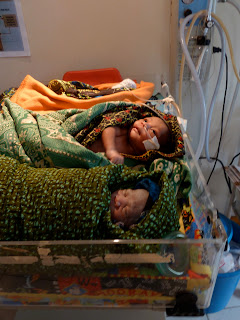 After the meeting, I was introduced to Labor and Delivery, where I was asked about a woman making poor progress in labor--the staff suggested a C/S. The hospital has C/S rate of about 20-25%, comparable to the U.S. Higher than I would have expected prior to the Mozambique trip where I appreciated that it is better to perform a few extra C/S's than to have vaginal deliveries of babies in need of non-existent resscitation. As in Mozambique, the nursery here consists of a single warmer where newborns stack up waiting for their mothers' recoveries.
Although augmentation of labor with pitocin would an option for slowly progress, given the long labor so far(unexpected for someone with prior deliveries) and her request for a tubal ligation, I agreed with the C/S. The baby was 3700 grams (over 8 lb), a probably cause for the stall. Afterward, when one of our nurses asked the mom what name she planned, she said, "you name it." The nurse suggested David, and David it was.

Although augmentation of labor with pitocin would an option for slowly progress, given the long labor so far(unexpected for someone with prior deliveries) and her request for a tubal ligation, I agreed with the C/S. The baby was 3700 grams (over 8 lb), a probably cause for the stall. Afterward, when one of our nurses asked the mom what name she planned, she said, "you name it." The nurse suggested David, and David it was.
Sunday, October 31, 2010
53: Overseas Project #8, Malawi, Day 3
The adjacent Presbyterian church (Dutch Presbyterians founded the hospital, church, nursing school and theological seminary) has an 8:00 English service and a 10:00 Chichewan service. English is the nation's official language, well-spoken by the educated, but most of the hospital's patients speak only the local Chichewa. My camera caught a visiting choir. Many mornings we were awaken by distant sounds of practicing choirs, and when the electricity was down at night, we again heard choirs.
The hospital struggles to stay solvent. Monthly hospital income: $31,000 patient fees (I have no idea where they get hard currency), $50,000 from the government for salaries, and about $15,000 donations, for a total of $96,000. Expenses: $16,500 medications and supplies, $75,000 staff salaries, $7,300 maintenance, and $10,000 administrative costs, for a total of $109,000. The government owes $24,000 based on prior agreements for capitated ob and peds, but that would cover just two months of the projected $12,000 monthly deficit.
By contrast my local hospital, St Joseph, has about the same bed capacity, but a billion dollar annual budget--that's over 83 million dollars a month.
The hospital struggles to stay solvent. Monthly hospital income: $31,000 patient fees (I have no idea where they get hard currency), $50,000 from the government for salaries, and about $15,000 donations, for a total of $96,000. Expenses: $16,500 medications and supplies, $75,000 staff salaries, $7,300 maintenance, and $10,000 administrative costs, for a total of $109,000. The government owes $24,000 based on prior agreements for capitated ob and peds, but that would cover just two months of the projected $12,000 monthly deficit.
By contrast my local hospital, St Joseph, has about the same bed capacity, but a billion dollar annual budget--that's over 83 million dollars a month.
Friday, October 8, 2010
52: Overseas Project #8, Malawi, Days 1-2
 Two red-eyes dissected by a 9-hr layover in Healthrow pretty much destroys my credibility as a travel agent, but about 45 hours after leaving Seattle we did arrive at Nkhoma, Malawi for overseas project #8.
With a bed capacity of 200, Nkhoma Hospital and its 10 satellite clinics serves an area of about 30,000 subsistence farmers. Patients are on their own for food, bed linen, even IV fluids. Our anesthetist expressed concerns about postoperative patients being underhydrated (adequate hydration is a critical postop issue) because patients can't afford IV fluids. But nursing neglect provides a better answer--no one walks around adding up supply costs for subsequent hospital bills.
For fourteen years Rainier Te Haal, a South African by birth but Dutch by heritage, temperament, and marriage, has been the hospital medical director. He is an all-purpose general surgeon and also takes call for anesthesia, providing spinals for cesarean deliveries. He has developed a specialty in vesicle-vaginal fistula repair, teaching the technique to Malawian colleagues. Rainier and Wilika have six children; the oldest son is in a boarding school in Nairobi, followed by three daughters and then two younger sons, both local adoptions. Four years ago he spent a Sabbatical in rural British Columbia and was tempted to stay, but “they need me here.”
Subscribe to:
Posts (Atom)


